

Are Carbon Ceramic Brakes Good for Daily Driving?
Carbon ceramic brakes began as a supercar and track option, but they now ship on many road cars, so the real question isn’t whether they work on the street. It’s whether they’re worth it for your commute, your vehicle, and your budget. Here is the straight answer, with the numbers, the trade-offs, and the models we build kits for.
Quick answer
Yes, for most owners of performance and luxury vehicles, carbon ceramic brakes are good for daily driving. Modern road-going carbon ceramic rotors bite from the first stop, leave almost no visible brake dust, and cut rotor weight by about half or more. The trade-offs are real: higher cost, occasional light noise at low speed when cold, and an expensive replacement if a rotor is damaged.
- Verdict
- Good for daily driving, with trade-offs.
- Best for
- Owners who keep a car three or more years, heavy SUVs and EVs, drivers with custom forged wheels, and anyone tired of black brake dust.
- Think twice if
- You will sell or turn in the car within about two years, your budget is tight, or you dislike occasional light hum from cold brakes.
- Rotor weight
- On the S63 AMG comparison: front about 14 lb vs. 31 lb for iron; rear about 10 lb vs. 23 lb.
- Stopping distance
- Up to 25% shorter than factory iron (Players Club Cars stated figure).
- Kit price
- From $12,500 for a complete Players Club Cars kit; most list at $12,500–$13,500.
- Dealer replacement
- $15,000–$35,000+ at dealerships; about $18,000–$20,000 for an AMG GT.
- Fitment
- Direct replacement that uses your factory calipers. Your VIN is required when you order.
- Lead time
- Built to order. Product pages currently list 4–6 weeks (Porsche kit) and 8–10 weeks (AMG kit).
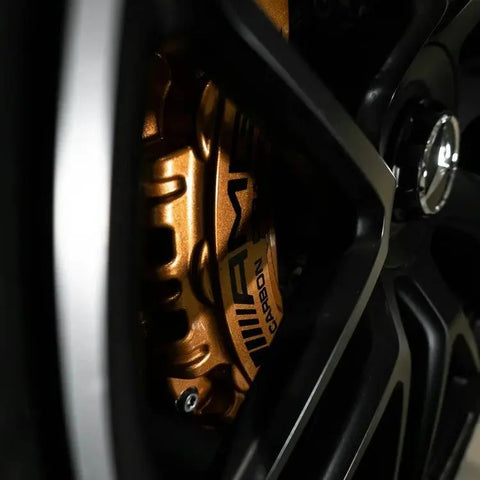
Steel vs. carbon ceramic: the daily-driving scorecard
Here is how the two rotor types compare on what daily drivers care about, plus cost.
| Factor | Steel (cast iron) rotors | Carbon ceramic rotors | Verdict for carbon ceramic |
|---|---|---|---|
| First stop in cold weather | Sharp and immediate | Solid bite from the first stop; peak grab arrives after a brief warm-up | Good |
| Low-speed noise | Generally quiet when properly bedded | Can hum or sing at low speed when cold; bedding and anti-seize fix most cases | Mixed |
| Brake dust | Heavy, dark, abrasive metallic dust | Virtually no visible dust | Excellent |
| Rotor weight (S63 AMG example) | Front about 31 lb, rear about 23 lb | Front about 14 lb, rear about 10 lb | Excellent |
| Fade under repeated hard stops | Can fade as heat builds | Higher friction at temperature; braking force holds up | Excellent |
| Rotor life on a street car | Typically 30,000–70,000 miles | Up to about 200,000 miles on street-driven cars | Excellent |
| Cost to buy or replace | Lowest | Players Club Cars kits start at $12,500; dealers charge $15,000–$35,000+ | Costly |
| Resurfacing and repair | Can be resurfaced | Cannot be resurfaced; replaced when worn or damaged | Mixed |
Mileage figures come from our earlier daily-driving review. Real life varies with driving style, pads, and conditions.
The honest breakdown: what daily driving with carbon ceramics is like
Cold starts and wet roads
The belief that carbon brakes don’t work until they’re hot comes from carbon-carbon brakes used in Formula 1 and aerospace. Road-going carbon ceramic matrix rotors are a different material, blended with silicon carbide, and they bite from the first stop, even in cold climates. Expect peak grab after a brief warm-up: the first stop of the day can feel slightly less sharp than iron. We cover the myth in our honest daily-driving review.
Squeal and low-speed noise
This is the most common worry, and it is partly valid. High-performance brakes can hum or sing under light pedal pressure, especially when cold. That is structural resonance, not a defect. Proper pad bedding and anti-seize compound on the pad backing plates at installation resolve most low-speed noise. Pad choice matters too, so look at our low-dust performance brake pads. For a deeper dive, read Do High-Performance Ceramic Rotors Squeal? Myths vs. Reality.
Brake dust and wheel finish
Cast-iron rotors shed abrasive metallic dust that clings to wheels and can damage their finish. Carbon ceramic rotors are hard and abrasion-resistant and leave a fine, non-binding residue, so wheels stay far cleaner. That matters most if you run custom forged wheels. If you are upgrading both, see our 2-piece forged wheels, monoblock wheels, and carbon fiber wheels.
Weight, handling, and EV efficiency
On the S63 AMG comparison, a front carbon ceramic rotor weighs about 14 lb versus 31 lb for the factory iron rotor, and a rear rotor about 10 lb versus 23 lb. That is roughly 55% and 57% lighter. Across four corners it removes about 60 lb of unsprung, rotating mass (2 × 17 lb in front plus 2 × 13 lb in the rear).
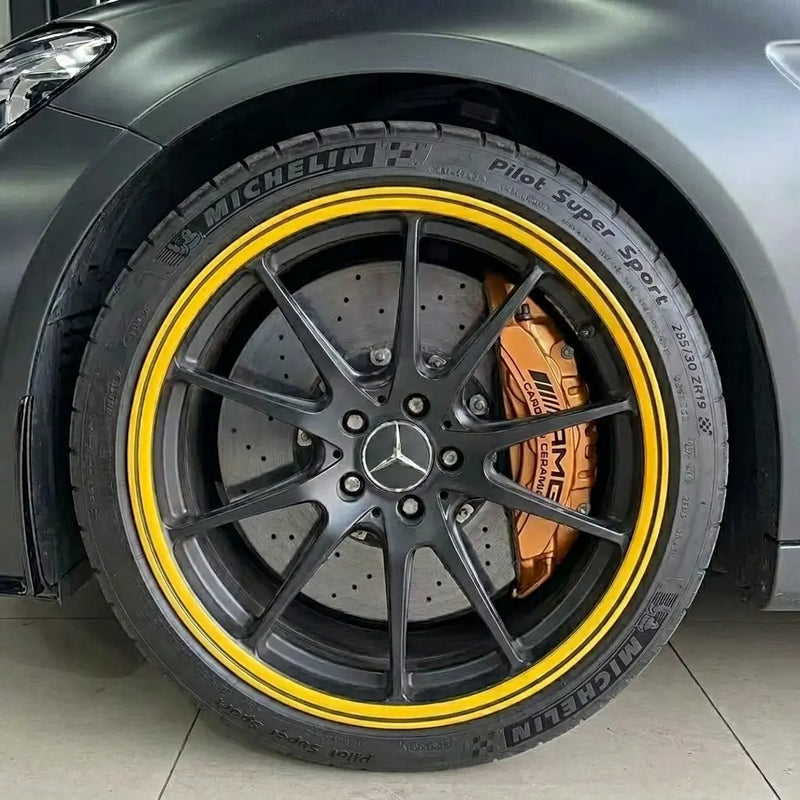
Less unsprung mass lets the suspension follow the road more quickly, which sharpens ride and steering response. On heavy EVs, less rotating mass can also support efficiency. And because regenerative braking means the friction brakes are used less often, iron rotors on EVs can develop surface rust, which ceramic composite rotors avoid.
Lifespan and total cost of ownership
Street-driven carbon ceramic rotors wear slowly. Our earlier review cites up to about 200,000 miles, a span in which iron rotors are typically replaced three to four times. The catch is the bill when ceramics do need replacing or are damaged: dealerships routinely charge $15,000–$35,000+ for a full carbon ceramic system, and about $18,000–$20,000 for an AMG GT (roughly $9,000 per axle for rotors and $1,000 per axle for pads). Players Club Cars kits for the same job start at $12,500.
Two cautions: ceramic rotors cannot be resurfaced like iron, and heavy track use shortens their life. For the numbers in depth, read How Much Do Carbon Ceramic Brakes Cost? and AMG GT Carbon Ceramic Brake Replacement: What It Really Costs.
Which daily drivers benefit most?
Carbon ceramics pay off where there is more mass to stop, more heat to manage, or more reason to keep the car for years.
| Vehicle type | Fit | Why | Example models we build kits for |
|---|---|---|---|
| Heavy luxury SUVs | Strong fit | More mass to stop and more heat to manage, so fade resistance and rotor weight savings both matter. | G63, GLE63, GLS63, Urus, Escalade-V, Bentayga |
| Electric SUVs, trucks, and sedans | Strong fit | Heavy vehicles. Regenerative braking leaves iron rotors prone to surface rust, and less rotating mass supports efficiency. | Escalade IQ, Hummer EV, Taycan, Lyriq, AMG EQE and EQS |
| Performance sedans and coupes | Strong fit | Fade resistance on spirited drives, less unsprung weight, and cleaner wheels. | AMG GT, C63, E63, S63, CT5-V Blackwing, Porsche 911 |
| Street-driven supercars | Strong fit | Often specified with ceramics from the factory; a replacement kit restores that style of braking. | Huracán, Aventador, Revuelto, Temerario |
| Leased or short-term cars, tight budgets | Probably not | The benefits build over years of ownership, and iron rotors cost far less up front. | See the alternatives below |
Carbon ceramic brake kits by brand
Every kit is built to order for a specific vehicle and uses your factory calipers. Prices are what the carbon ceramic collection lists today.
-
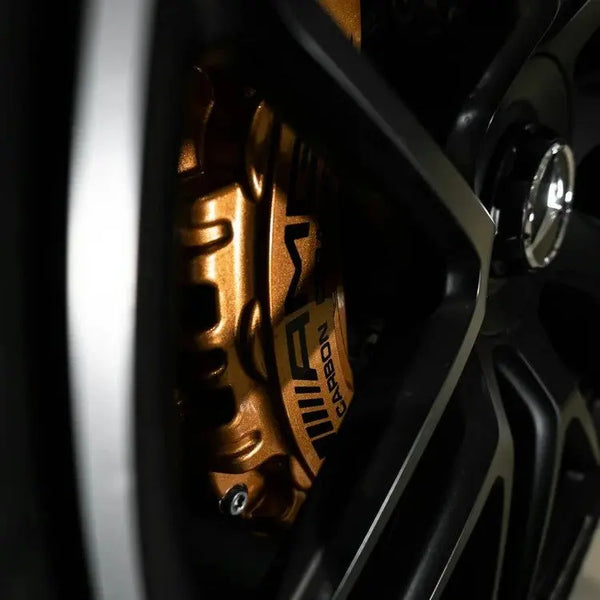
Mercedes-AMG
AMG GT (C190, C192, X290), G63 and G580 EQ, GLE63, GLS63, GLC63, S63, E63, C63, CLS, SL63, CLE63, EQE and EQS AMG
From $12,500
View AMG kits -
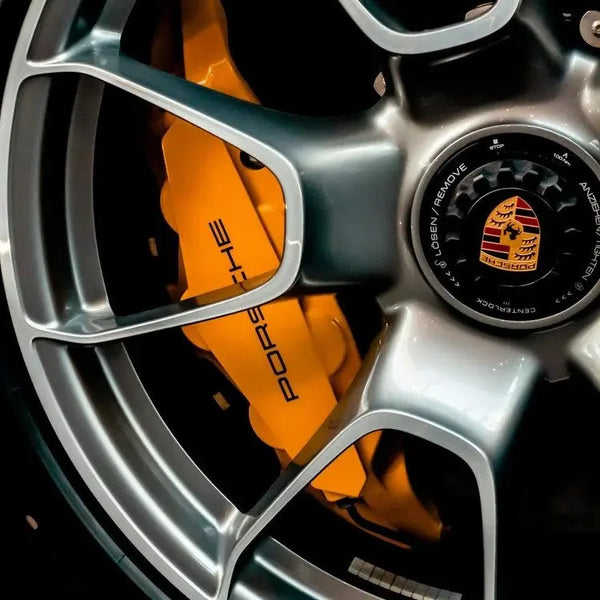
Porsche
911, Cayman, Panamera, Cayenne, Macan and Taycan (PCCB-style upgrade)
$13,500
View Porsche kit -
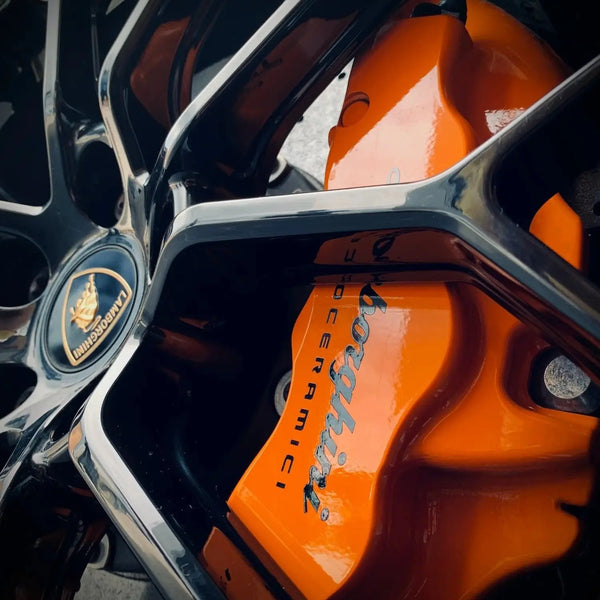
Lamborghini
Huracán, Aventador, Revuelto, Temerario and Urus. Separate listings cover Sian, Countach, Gallardo and Murciélago.
$13,500
View Lamborghini kits -

-

Bentley
Continental GT, Flying Spur, Bentayga and Batur (420 mm big brake upgrade)
$13,500
View Bentley kit -

Popular models and direct kit links
Some listings have several variants, so the final price depends on the model you select. Don’t see your car? Browse all 56 listings in the carbon ceramic collection or email your VIN to info@playersclubcars.com.
If carbon ceramic isn’t right for you
Carbon ceramics are a long-term investment, and they are not the only way to improve daily braking. If you plan to sell soon, or you mainly want a step up from factory iron, compare our 2-piece cross-drilled rotors with our low-dust performance brake pads. If brake dust is your main complaint, start with the pads.
How to order, and what to have ready
- Confirm your model and generation code, for example G63 W465, AMG GT C192, Huracán LP610 or EVO, Taycan, or Escalade IQ.
- Open the matching kit in the carbon ceramic collection or use the links above.
- Select your model on the product page and enter your VIN in the required “VIN & Notes” field so fitment can be confirmed.
- Check the estimated production time on the product page. Kits are built to order, and product pages currently list 4–6 weeks for the Porsche kit and 8–10 weeks for the AMG kit.
- Ask questions or request an unlisted model at info@playersclubcars.com with your vehicle, year, and current rotor type. Worldwide shipping is available and is calculated at checkout.
Per our carbon ceramic collection page, kits carry a 1-year structural warranty and a 1-year finish warranty, and 0% interest financing is available through Affirm upon approval. Installation by a qualified technician and proper pad bedding are strongly recommended.
Carbon ceramic brakes for daily driving: FAQ
Are carbon ceramic brakes good for daily driving?
Yes, for most owners of performance and luxury vehicles. Modern road-going carbon ceramic rotors bite from the first stop, leave almost no visible brake dust, and are about 55–57% lighter per rotor than iron in our S63 AMG comparison. The trade-offs are upfront cost, occasional light low-speed noise when cold, and an expensive replacement if a rotor is damaged.
Do carbon ceramic brakes work when cold?
Yes. The idea that they don’t work until hot comes from carbon-carbon brakes used in Formula 1 and aerospace. Road-legal carbon ceramic matrix rotors are blended with silicon carbide and bite from the first stop, even in cold weather. Pads reach peak grab after a brief warm-up, so the first stop of the day can feel slightly less sharp than iron.
Do carbon ceramic brakes squeal?
Sometimes. They can hum or sing at low speed under light pedal pressure, especially when cold. That is structural resonance, not a defect. Proper pad bedding and anti-seize compound on the pad backing plates at installation resolve most low-speed noise. Our guide Do High-Performance Ceramic Rotors Squeal? Myths vs. Reality covers it in detail.
Do carbon ceramic brakes make brake dust?
Very little. Cast-iron rotors shed abrasive metallic dust that dulls and can damage wheel finishes. Carbon ceramic rotors are hard and abrasion-resistant and leave a fine, non-binding residue, so wheels, especially custom forged wheels, stay far cleaner.
How long do carbon ceramic rotors last on a street car?
Much longer than iron on a street-driven car. Our daily-driving review cites up to about 200,000 miles versus 30,000–70,000 miles for iron rotors. Real life depends on driving style, pads, track use, and conditions. Carbon ceramic rotors cannot be resurfaced like iron; they are replaced when worn or damaged.
How much does it cost to replace carbon ceramic brakes?
Dealerships routinely charge about $15,000–$35,000+ for a full carbon ceramic replacement on high-performance and exotic vehicles, and roughly $18,000–$20,000 for an AMG GT. Players Club Cars kits start at $12,500, and most list at $12,500–$13,500 depending on the vehicle; some variants cost more. See How Much Do Carbon Ceramic Brakes Cost? for the full breakdown.
Can I upgrade from iron rotors to carbon ceramic?
On supported vehicles, yes. Players Club Cars kits are direct replacements that use your factory calipers, so you can replace worn OEM ceramic rotors or move from heavy one-piece iron rotors to lightweight ceramic. Your VIN is required when you order so fitment can be confirmed for your exact model.
Are carbon ceramic brakes a good choice for EVs like the Escalade IQ, Hummer EV, or Taycan?
Often, yes. EVs are heavy, so cutting rotor mass helps, and because regenerative braking means the friction brakes are used less often, iron rotors on EVs can develop surface rust. Ceramic composite rotors do not rust like cast iron. Players Club Cars builds kits for the Cadillac Escalade IQ and Lyriq, GMC Hummer EV, Porsche Taycan, and AMG EQE and EQS models.
Which vehicles does Players Club Cars make carbon ceramic brake kits for?
Mercedes-AMG (GT C190, C192 and X290, G63, GLE63, GLS63, GLC63, S63, E63, C63, CLS, SL63, CLE63, EQE and EQS), Lamborghini (Huracán, Urus, Aventador, Revuelto, Temerario, Sian, Countach, Gallardo, Murciélago), Porsche (911, Cayman, Panamera, Cayenne, Macan, Taycan), Cadillac (Escalade-V, Escalade IQ, CT5-V Blackwing, Lyriq), Bentley (Continental GT, Flying Spur, Bentayga, Batur), and GMC Hummer EV. Browse the full carbon ceramic collection or email your VIN to info@playersclubcars.com.
How long does a kit take to arrive?
Every kit is built to order. Estimated production time is listed on each product page: currently 4–6 weeks for the Porsche kit and 8–10 weeks for the AMG kit (as of November 2026). Worldwide shipping is available, with shipping calculated at checkout.
Keep reading
-
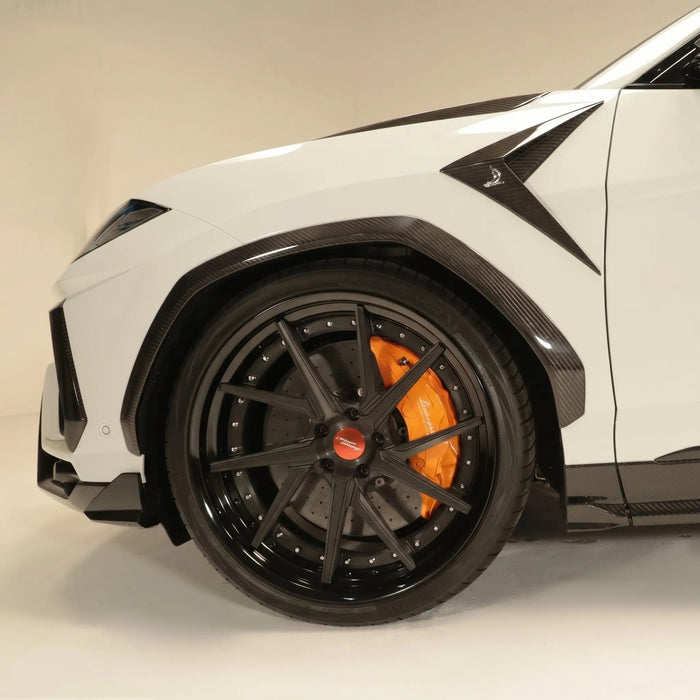
Carbon Ceramic Brakes vs. Steel Rotors: The Honest Daily Driving Review
The pros, the objections, and the myths versus reality on cold bite, squeal, and replacement cost.
-
Do High-Performance Ceramic Rotors Squeal? Myths vs. Reality
Myths versus reality on whether high-performance ceramic rotors squeal.
-
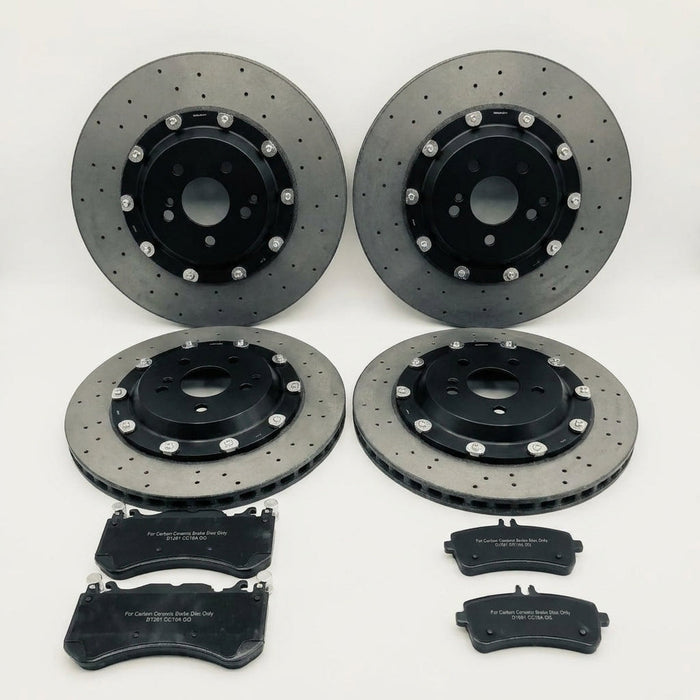
How Much Do Carbon Ceramic Brakes Cost? The Complete Replacement & Upgrade Guide
Dealerships routinely charge $15,000–$35,000+ to replace a carbon ceramic system. This guide covers the replacement and upgrade options.
More guides and pages
- Executive Guide to Performance Braking: Upgrading to Carbon Ceramic Brakes
- Carbon Ceramic Brakes Explained
- Why Upgrade to Carbon Ceramic Brakes
- AMG GT Carbon Ceramic Brake Replacement: What It Really Costs
- Upgrading the AMG GT Braking System: The Complete Performance Guide
- Upgrading the Escalade IQ: Custom Wheels and Brakes for Atlanta Commuters
- Bentley Carbon Ceramic Brakes That Change Everything
- Customer Builds & Reviews
- About Players Club Cars and FAQ
Sources and data notes. Prices, fitment, and kit lists come from the Players Club Cars carbon ceramic collection (56 listings) and the AMG and Porsche product pages, checked on November 20, 2026. Prices and lead times change, so confirm them on the product page. Weight and stopping-distance figures are Players Club Cars specifications, including the S63 AMG rotor comparison; results vary with vehicle, pads, tires, and driving. Mileage figures come from our earlier daily-driving review. Dealer cost ranges come from our cost guide and our AMG GT cost post.
Find the kit for your car
Browse all 56 carbon ceramic kit listings, or email your VIN and current rotor type and we’ll point you to the right kit.
Browse carbon ceramic kitsEmail your VIN