

Enhancing Audi R8 Aerodynamics: 2026 Guide
Enhancing Audi R8 Aerodynamics: 2026 Guide
The Audi R8 represents the pinnacle of German engineering, combining raw performance with refined luxury. As we move through 2026, owners and enthusiasts continue to push the boundaries of what this iconic supercar can achieve. While the R8 delivers impressive aerodynamic performance from the factory, strategic upgrades can dramatically enhance downforce, stability, and overall track capability. Understanding how to optimize aerodynamics without compromising the vehicle's elegant design requires careful consideration of components, materials, and engineering principles.
Understanding Audi R8 Factory Aerodynamics
The Audi R8 benefits from decades of racing heritage and wind tunnel testing. Its mid-engine layout, integrated rear diffuser, and carefully sculpted body panels work in harmony to manage airflow at high speeds. The fixed rear wing on performance variants generates significant downforce, while the flat underbody reduces turbulence and improves stability. However, these factory configurations represent a compromise between street usability, aesthetics, and performance.

For owners seeking track-focused performance or simply wanting to maximize their vehicle's potential, aftermarket aerodynamic enhancements offer measurable improvements. The key lies in selecting components that complement the R8's existing aerodynamic architecture rather than fighting against it. Carbon fiber components have become the gold standard for these upgrades, offering strength, weight savings, and superior performance characteristics.
Modern computational fluid dynamics and real-world testing have revealed opportunities for improvement in several key areas: front splitter design, side skirt integration, rear diffuser optimization, and rear wing configuration. Each of these elements contributes to the overall aerodynamic balance, affecting both downforce generation and drag coefficient.
Carbon Fiber Aerodynamic Components for Maximum Performance
Carbon fiber represents the ideal material for aerodynamic upgrades due to its exceptional strength-to-weight ratio. When enhancing your R8's aerodynamics, weight management remains critical. Adding downforce through heavy components can negate performance gains by increasing overall vehicle mass and raising the center of gravity.
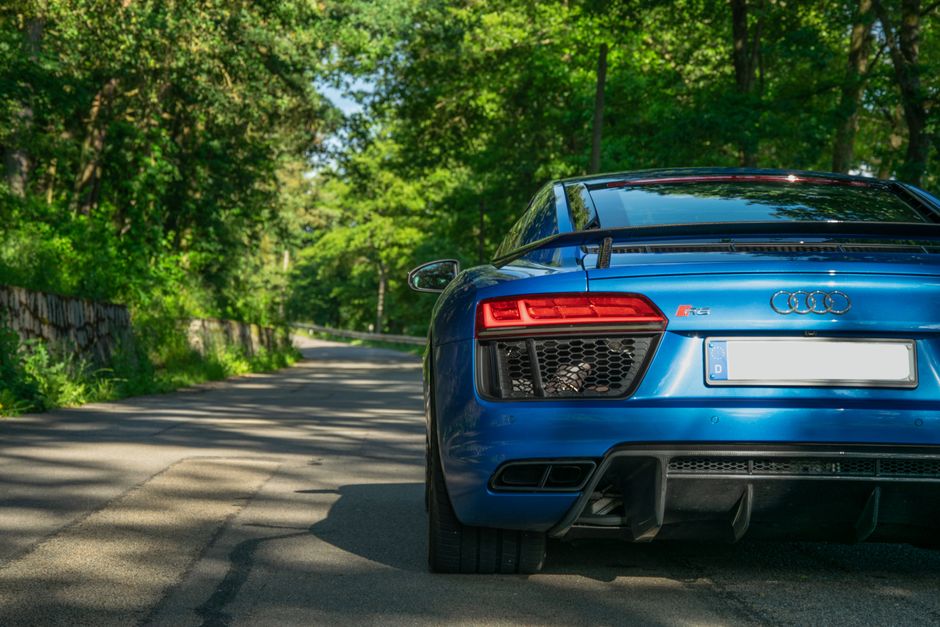
A comprehensive aerodynamic upgrade typically begins with a carbon fiber front splitter extension. This component extends the leading edge of the front bumper, increasing front downforce and improving high-speed stability. The splitter works by redirecting airflow under the vehicle, creating a low-pressure zone that pulls the front end downward. When properly designed, a front splitter can generate substantial downforce without significant drag penalties.
Side skirts represent another critical aerodynamic element often overlooked by casual enthusiasts. These carbon fiber panels seal the area between the front and rear wheel wells, preventing high-pressure air from the sides of the vehicle from flowing underneath. This maintains the low-pressure zone created by the front splitter and underbody, maximizing overall downforce efficiency. Side skirts also contribute to cleaner airflow toward the rear diffuser, improving its effectiveness.
Rear diffusers work by accelerating airflow underneath the vehicle and managing its exit. Upgraded carbon fiber diffusers feature more aggressive angles and additional strakes or fins that channel air more efficiently. This creates stronger low-pressure zones under the car, increasing rear downforce and improving traction during acceleration and cornering. The diffuser must be carefully matched to the front splitter to maintain proper aerodynamic balance between the front and rear axles.
Wheel Selection and Aerodynamic Efficiency
Wheels play a surprisingly significant role in overall vehicle aerodynamics. The wheel wells represent major sources of aerodynamic drag and turbulence, with rotating wheels creating complex airflow patterns that can disrupt the carefully managed air moving along the body panels. Selecting the right wheels involves balancing weight, strength, and aerodynamic efficiency.

Lightweight carbon fiber wheels offer triple benefits for aerodynamic performance. First, their reduced rotational mass improves acceleration and braking response. Second, the weight savings at the corners lowers the overall vehicle mass and unsprung weight, enhancing handling dynamics. Third, modern carbon fiber wheel designs incorporate aerodynamic features that reduce turbulence in the wheel wells.
The spoke design, depth, and surface finish all contribute to how air interacts with the rotating wheel assembly. Forged and carbon fiber wheels designed specifically for high-performance applications often feature covered or semi-covered spoke designs that smooth airflow and reduce drag. These wheels maintain structural integrity while presenting a more aerodynamically efficient profile to oncoming air.
For the Audi R8, wheel selection should prioritize both performance and aesthetics. The wide stance and aggressive wheel arches demand wheels that fill the space properly while maintaining aerodynamic efficiency. Properly sized and designed wheels contribute to overall vehicle stability, particularly at triple-digit speeds where every aerodynamic detail matters.
Brake System Upgrades and Aerodynamic Cooling
High-performance driving generates tremendous heat in the braking system, and managing this heat requires careful attention to airflow. Brake cooling represents a critical intersection between aerodynamics and thermal management. While cooling ducts can improve brake performance, they must be carefully designed to avoid disrupting the overall aerodynamic balance.

Carbon ceramic brakes offer significant advantages for performance-oriented R8 owners. Beyond their superior stopping power and fade resistance, carbon ceramic brake rotors operate more efficiently at high temperatures and generate less brake dust than traditional iron rotors. This thermal efficiency means less aggressive cooling ducting is required, preserving aerodynamic efficiency.
The reduced unsprung weight of carbon ceramic brake systems also contributes to improved handling dynamics and reduced wheel well turbulence. Lighter brake assemblies allow suspension components to respond more quickly to road surface changes, maintaining optimal tire contact and improving both grip and aerodynamic stability. When paired with lightweight wheels, carbon ceramic brakes for exotic vehicles deliver measurable performance improvements on both road and track.
Brake cooling ducts must be integrated thoughtfully into the front bumper and splitter design. Properly executed, these ducts channel cool air directly to the brake rotors and calipers without creating excessive drag or disrupting front-end downforce. Many aftermarket carbon fiber splitters incorporate integrated brake cooling solutions that maintain aerodynamic efficiency while providing adequate thermal management.
Rear Wing and Spoiler Optimization
The rear wing represents the most visible aerodynamic component and generates the majority of rear downforce. However, wings create significant drag, requiring careful tuning to balance downforce gains against drag penalties. The ideal wing setup depends on your specific performance goals and driving environment.

For street-focused driving, a more conservative wing angle provides adequate downforce while minimizing drag and maintaining acceptable fuel economy. Track-oriented setups benefit from more aggressive wing angles that generate maximum downforce, accepting the drag penalty as worthwhile for improved lap times. Adjustable wings offer the flexibility to tune aerodynamic balance for different conditions and driving styles.
Carbon fiber rear wings provide the necessary structural rigidity while minimizing weight. The wing endplates serve critical aerodynamic functions, managing airflow at the wing tips and preventing high-pressure air from the upper surface from wrapping around to the lower surface and reducing downforce efficiency. Properly designed endplates can also help manage airflow toward the rear of the vehicle, reducing turbulence in the wake.
Swan neck mounting systems have become increasingly popular in recent years. These mounts attach to the top surface of the wing rather than the bottom, eliminating disruption to the low-pressure airflow under the wing and improving overall downforce efficiency. This mounting style also provides cleaner aesthetics while delivering measurable performance improvements.
Aerodynamic Balance and Professional Tuning
Adding aerodynamic components without considering overall balance can create dangerous handling characteristics. A vehicle with excessive front downforce and insufficient rear downforce will experience oversteer at high speeds, potentially leading to loss of control. Conversely, too much rear downforce creates understeer and reduces corner entry speeds.
Professional aerodynamic tuning involves testing different component combinations to achieve the desired balance for your specific needs. Track testing with telemetry systems and data logging allows precise measurement of downforce effects on lap times, cornering speeds, and braking performance. Wind tunnel testing, while expensive, provides the most accurate data for optimizing aerodynamic balance.
Many performance shops offer consultation services to help owners select appropriate aerodynamic upgrades based on their goals and budget. These professionals understand how different components interact and can recommend combinations that deliver predictable, safe performance improvements. This expertise proves invaluable when investing significant resources in aerodynamic enhancements.
Suspension tuning must accompany significant aerodynamic upgrades. Increased downforce compresses the suspension, potentially altering ride height and suspension geometry. Stiffer springs and dampers may be necessary to maintain proper ride height under aerodynamic loads while preventing the suspension from bottoming out. Corner weighting and alignment adjustments ensure the vehicle takes full advantage of increased downforce.
Real-World Testing and Validation
Just as athletes monitor their training progress using established metrics and guidance from organizations like the American College of Sports Medicine, automotive performance requires systematic measurement and validation. On-track testing remains the ultimate proving ground for aerodynamic modifications, revealing how theoretical improvements translate to real-world performance gains.
Coast-down testing provides valuable data about drag coefficients and overall aerodynamic efficiency. This simple test involves accelerating to a specific speed, placing the transmission in neutral, and measuring how long the vehicle takes to decelerate to a lower speed. Reduced coast-down times indicate improved aerodynamic efficiency. Multiple runs in both directions eliminate wind effects and provide statistically relevant data.
Cornering speed measurements at consistent entry speeds reveal downforce improvements. Increased mid-corner speeds indicate effective downforce generation, while maintained or improved exit speeds confirm that the aerodynamic balance remains appropriate. Data acquisition systems track these metrics precisely, eliminating subjective assessment and providing concrete evidence of performance gains.
High-speed stability testing evaluates how aerodynamic modifications affect vehicle behavior at maximum velocity. A well-balanced aerodynamic package should increase high-speed stability and driver confidence. Any tendency toward nervousness or instability indicates improper balance requiring immediate attention before further performance driving.
Future Trends in Automotive Aerodynamics
As we progress through 2026, active aerodynamics continue advancing rapidly. Electronically adjustable components that adapt to driving conditions in real-time represent the cutting edge of aerodynamic technology. Active front splitters, adjustable side skirts, and dynamic rear wings optimize aerodynamic efficiency and downforce for every driving scenario.
Advanced materials beyond carbon fiber are emerging for specific aerodynamic applications. Graphene-enhanced composites offer even better strength-to-weight ratios, while advanced polymers provide flexibility for active aerodynamic components. These materials enable increasingly sophisticated designs that were previously impossible to manufacture.
Computational fluid dynamics software continues improving, allowing designers to simulate increasingly complex airflow scenarios with greater accuracy. This reduces the need for expensive wind tunnel testing and accelerates the development cycle for new aerodynamic components. Amateur enthusiasts can now access software tools that provide meaningful aerodynamic insights.
Environmental considerations increasingly influence aerodynamic design. Regulations promoting fuel efficiency and reduced emissions drive innovations in drag reduction technologies. These developments benefit performance applications, as reduced drag improves both efficiency and top speed. The intersection of environmental responsibility and performance optimization creates exciting opportunities for future aerodynamic enhancements.
Conclusion
Enhancing Audi R8 aerodynamics represents a sophisticated undertaking that balances performance gains, aesthetic considerations, and practical usability. Strategic upgrades including carbon fiber splitters, side skirts, diffusers, and rear wings deliver measurable improvements in downforce, stability, and overall capability. Lightweight wheels and advanced brake systems complement these aerodynamic enhancements while providing additional performance benefits.
Success requires understanding how individual components interact within the complete aerodynamic system. Professional guidance, systematic testing, and careful tuning ensure modifications deliver the intended results without creating dangerous handling characteristics. The investment in quality components from specialized providers yields long-term performance advantages and driving enjoyment.
As aerodynamic technology continues advancing, owners of iconic vehicles like the Audi R8 can access increasingly sophisticated solutions for extracting maximum performance. Whether pursuing track records or simply enjoying spirited driving on challenging roads, properly executed aerodynamic enhancements transform the driving experience while respecting the R8's fundamental excellence. The key lies in selecting precision-engineered components, maintaining aerodynamic balance, and validating improvements through real-world testing.