

Detailing Carbon Fiber Luxury Cars: the Pro Guide
Detailing carbon fiber luxury cars is not the same as washing a standard painted surface. Carbon fiber components on vehicles like Ferrari, Lamborghini, and Mercedes-AMG are structurally sensitive and finish-critical. Use the wrong cleaner, the wrong cloth, or the wrong technique, and you risk micro-cracking the resin, stripping protective coatings, or permanently dulling that signature woven gloss. This guide covers the exact tools, cleaning sequences, coating protocols, and troubleshooting steps that keep carbon fiber components in peak condition.
Table of Contents
- Key takeaways
- Detailing carbon fiber luxury cars: tools and products
- Step-by-step cleaning process for carbon fiber
- Applying protective coatings to carbon fiber
- Troubleshooting common carbon fiber detailing issues
- What most owners get wrong about carbon fiber care
- Premium carbon fiber components from Playersclubcars
- FAQ
Key takeaways
| Point | Details |
|---|---|
| Use pH-neutral cleaners only | Harsh chemicals degrade resin and strip protective coatings from carbon fiber surfaces. |
| Decontaminate before coating | Skipping chemical decontamination causes poor coating adhesion and shorter protection lifespan. |
| Ceramic coatings every 6-12 months | Reapply UV-stabilized ceramic coatings regularly to prevent yellowing and micro-cracking. |
| Agitation method matters most | Soft microfiber and indirect spray application protect the weave better than any chemical alone. |
| Inspect under proper lighting | Routine inspection with directional lighting catches early resin degradation before it becomes structural damage. |
Detailing carbon fiber luxury cars: tools and products
Getting the right materials together before touching the car is non-negotiable. Carbon fiber is not forgiving of improvisation.
Cleaners and shampoos
- pH-neutral car shampoo: 10 mL per 4 L of distilled water is the correct dilution ratio
- Avoid any cleaner containing citrus solvents, tar removers, or alkaline degreasers
- Do not use household dish soap or all-purpose cleaners. These strip resin-based clear coats rapidly.
Microfiber specifications
- Washing mitts: ultra-soft, plush pile, 350+ gsm rating
- Drying and buffing towels: 500 to 600 gsm for scratch-free contact
- Keep separate mitts for upper body panels and lower panels. Grit transfer from rocker panels to a carbon fiber hood causes fine scratches that compound over time.
Protection products
- UV-stabilized ceramic coatings rated for carbon fiber and composite surfaces
- Ceramic spray boosters for between full coating cycles
- Iron fallout remover and light isopropyl alcohol (IPA) for decontamination. No clay bars on bare carbon fiber.
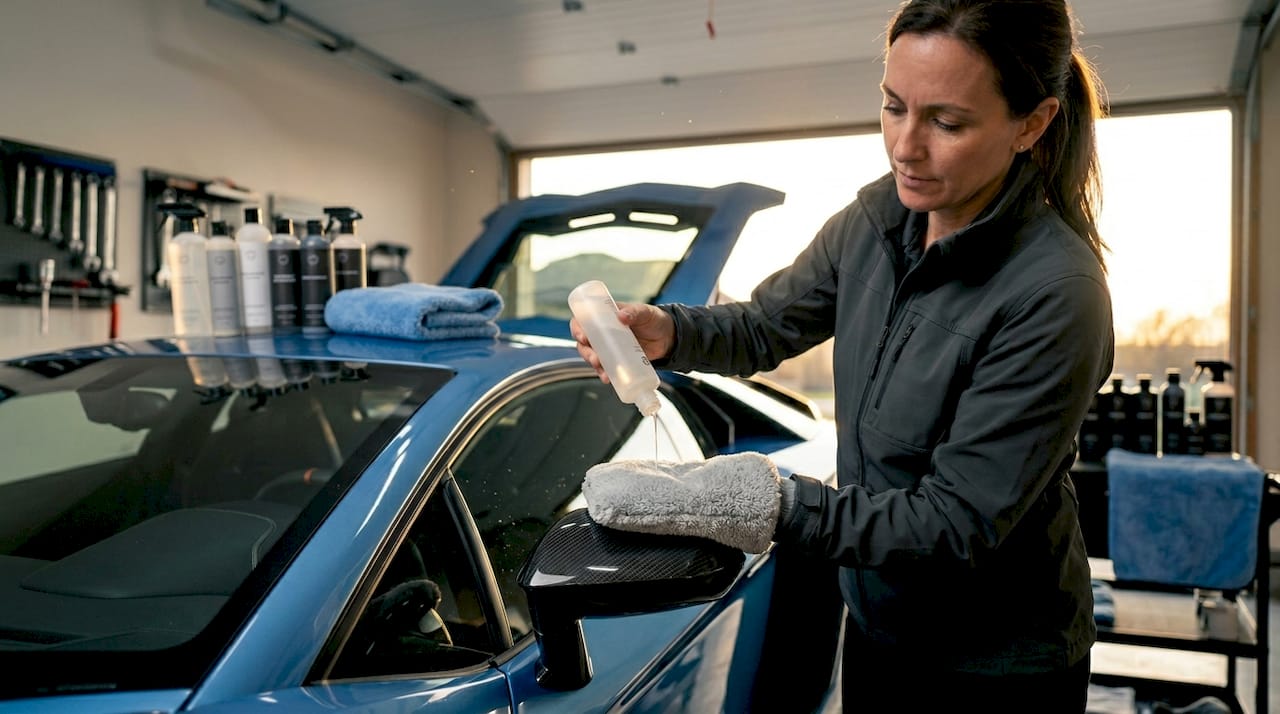
Pro Tip: Spray your cleaner onto the microfiber mitt or brush first, not directly onto the carbon fiber surface. Direct spray causes oversaturation and streaking in the weave.
| Product type | Recommended | Avoid |
|---|---|---|
| Shampoo | pH-neutral, diluted in distilled water | Citrus-based, alkaline degreasers |
| Decontamination | Iron fallout remover, IPA | Clay bars, tar removers |
| Protection | UV-stabilized ceramic coating | Carnauba wax, silicone sprays |
| Drying | 500-600 gsm microfiber towel | Terry cloth, paper towels |
Step-by-step cleaning process for carbon fiber
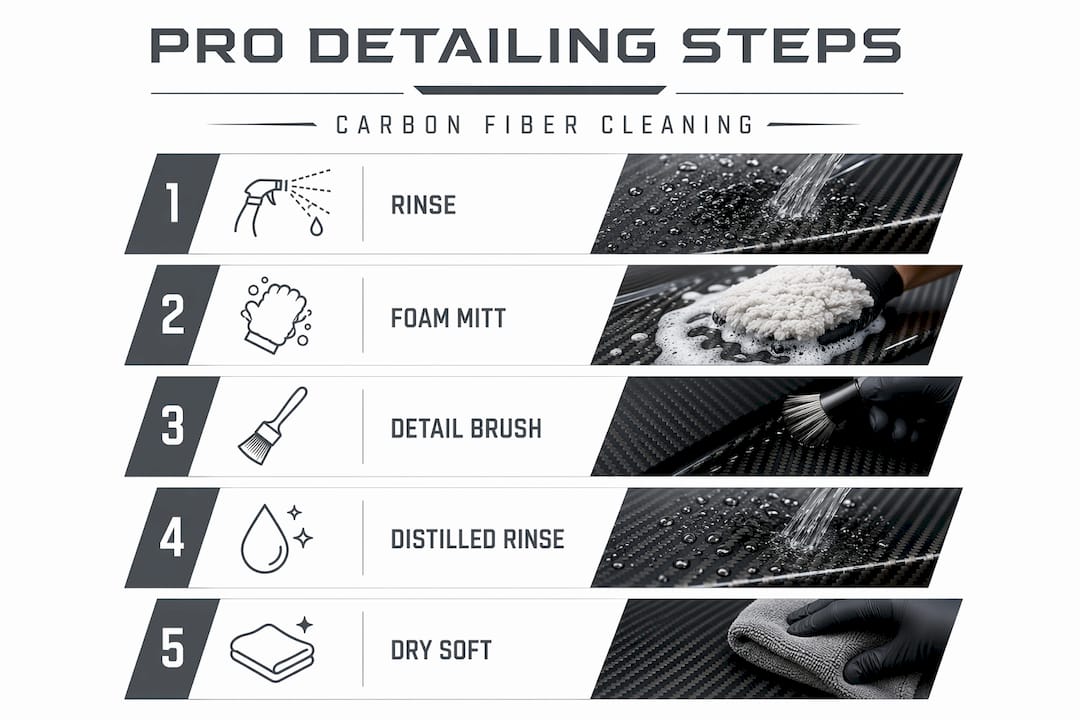
Follow this sequence every time. Skipping steps creates compounding damage over multiple wash cycles.
-
Pre-rinse with low pressure. Use a garden hose or pressure washer set to 800 PSI or below, held at least 30 cm away from seams and edges. High-pressure spray near panel edges forces water under the resin layer and initiates delamination.
-
Set up the two-bucket method. One bucket holds your pH-neutral shampoo solution. The second holds clean rinse water with a grit guard at the bottom. Rinse the mitt in the second bucket after each panel pass.
-
Wash in straight lines, following the weave direction. Circular motions trap grit in the weave pattern and create swirl marks. Work panel by panel from top to bottom.
-
Rinse thoroughly between panels. Do not let shampoo solution dry on carbon fiber. It leaves mineral deposits that etch into the clear coat.
-
Chemical decontamination. After washing, apply an iron fallout remover to the surface and allow it to dwell per product instructions. Follow with a light wipe using isopropyl alcohol on a clean microfiber cloth. This step removes embedded contaminants that washing alone cannot address.
-
Dry immediately. Pat dry using a 500 to 600 gsm microfiber drying towel. Do not drag the towel across the surface. Lift and place, then blot. Water spots on carbon fiber with a degraded clear coat can etch permanently.
Pro Tip: Work in shade or indoors whenever possible. Direct sunlight accelerates shampoo evaporation and increases the risk of water spotting during the wash process.
A bi-weekly washing schedule is the standard recommendation for vehicles in regular use. In high-traffic or high-pollution environments, weekly washing is more appropriate.
Applying protective coatings to carbon fiber
Protection is where carbon fiber care separates from general detailing. Ceramic coatings for carbon fiber are not cosmetic add-ons. They are the primary defense against UV degradation, thermal cycling, and resin breakdown.
Surface preparation before coating
- Complete the full cleaning and decontamination sequence described above.
- Wipe all surfaces with isopropyl alcohol at 70% concentration on a fresh microfiber cloth. This removes any residual oils or product films.
- Inspect under a single-point light source held at a low angle. Any remaining contamination will cast a shadow. Do not proceed until the surface is fully clean.
- Allow the surface to reach ambient temperature if the car was recently driven.
Coating application
- Work in a controlled environment: 18 to 25°C ambient temperature, low humidity, no direct airflow
- Apply ceramic coating to a foam applicator block, not directly to the panel
- Work in 30 x 30 cm sections using straight overlapping passes
- Level the coating with a clean microfiber towel within the product’s specified flash time. Timing varies by product and temperature.
Pro Tip: If the coating flashes too quickly, the ambient temperature is too high. Drop to a cooler environment before continuing. Rushing this step produces uneven gloss and premature coating failure.
Curing and maintenance cycles
- Allow 72 hours of curing time without moisture exposure after full application
- Do not wash the vehicle or expose it to rain during the curing window
- In high-UV climates such as the U.S. Sunbelt, reapply ceramic coatings every 6 months. In moderate climates, a 12-month cycle is acceptable.
- Between full coating cycles, use a ceramic spray booster after each wash to maintain hydrophobic performance
Note that vinyl-wrapped carbon fiber surfaces require vinyl-safe ceramic products. Standard coatings formulated for bare carbon fiber or paint may not bond correctly to vinyl films.
Troubleshooting common carbon fiber detailing issues
Even with correct technique, issues develop over time. Knowing what to look for and how to respond prevents minor problems from becoming expensive repairs.
Signs of UV damage and resin degradation
- Yellowing or amber tint in the clear coat layer
- Chalky or hazy appearance when viewed in direct light
- Loss of depth in the weave pattern
Unprotected carbon fiber shows 3.2 times higher gloss loss and 4.7 times more micro-cracking after 36 months compared to properly coated surfaces. This data makes the case for consistent coating maintenance more clearly than any visual example.
Scratches and surface damage
- Light surface scratches in the clear coat can sometimes be addressed with a light machine polish using a soft foam pad at low speed. Test on an inconspicuous area first.
- Scratches that penetrate through the clear coat to the carbon fiber weave require professional repair. Do not attempt to fill or sand these at home.
- Never use rotary polishers on carbon fiber without professional training. The heat generated can cause resin softening and delamination.
Inspection routine
- Use a single-point LED light held at a low angle across the surface
- Inspect after every wash cycle, not just before coating applications
- Check panel edges and mounting points for early signs of delamination or lifting
Detailing professionals consistently note that mechanical abrasion, not chemical strength, is the primary cause of carbon fiber surface damage. Incorrect agitation technique accounts for more long-term finish degradation than any product choice.
Warnings
- Do not use automatic car washes with rotating brushes on carbon fiber components
- Do not apply abrasive compounds without confirming the scratch depth
- Avoid pressure washing directly at panel seams, badges, or mounting hardware
What most owners get wrong about carbon fiber care
In my experience working with carbon fiber components across Ferrari, Lamborghini, Porsche, and Mercedes-AMG platforms, the single most common mistake is treating carbon fiber like painted metal. Owners who are meticulous about their paint correction and wax schedules often apply the same logic to carbon fiber and get poor results.
Carbon fiber’s vulnerability is in the resin matrix, not the fiber itself. I’ve seen components that looked perfect on the surface develop subsurface micro-cracking because the owner used a clay bar during decontamination. The mechanical abrasion of clay on bare carbon fiber is unnecessary and damaging. Iron fallout removers handle the same job without contact.
The second pattern I see consistently is skipping surface prep before coating. Skipping decontamination results in uneven coatings and shorter lifespan due to poor adhesion. Owners apply an expensive ceramic coating over a surface that still has contamination embedded in it, then wonder why the coating fails in six months.
My recommendation: build a fixed maintenance schedule and follow it without shortcuts. Bi-weekly washes, chemical decontamination every 90 days, and a full ceramic coating cycle every 6 to 12 months depending on climate. That routine, executed consistently, keeps carbon fiber components in showroom condition for years.
— Players Club Cars
Premium carbon fiber components from Playersclubcars
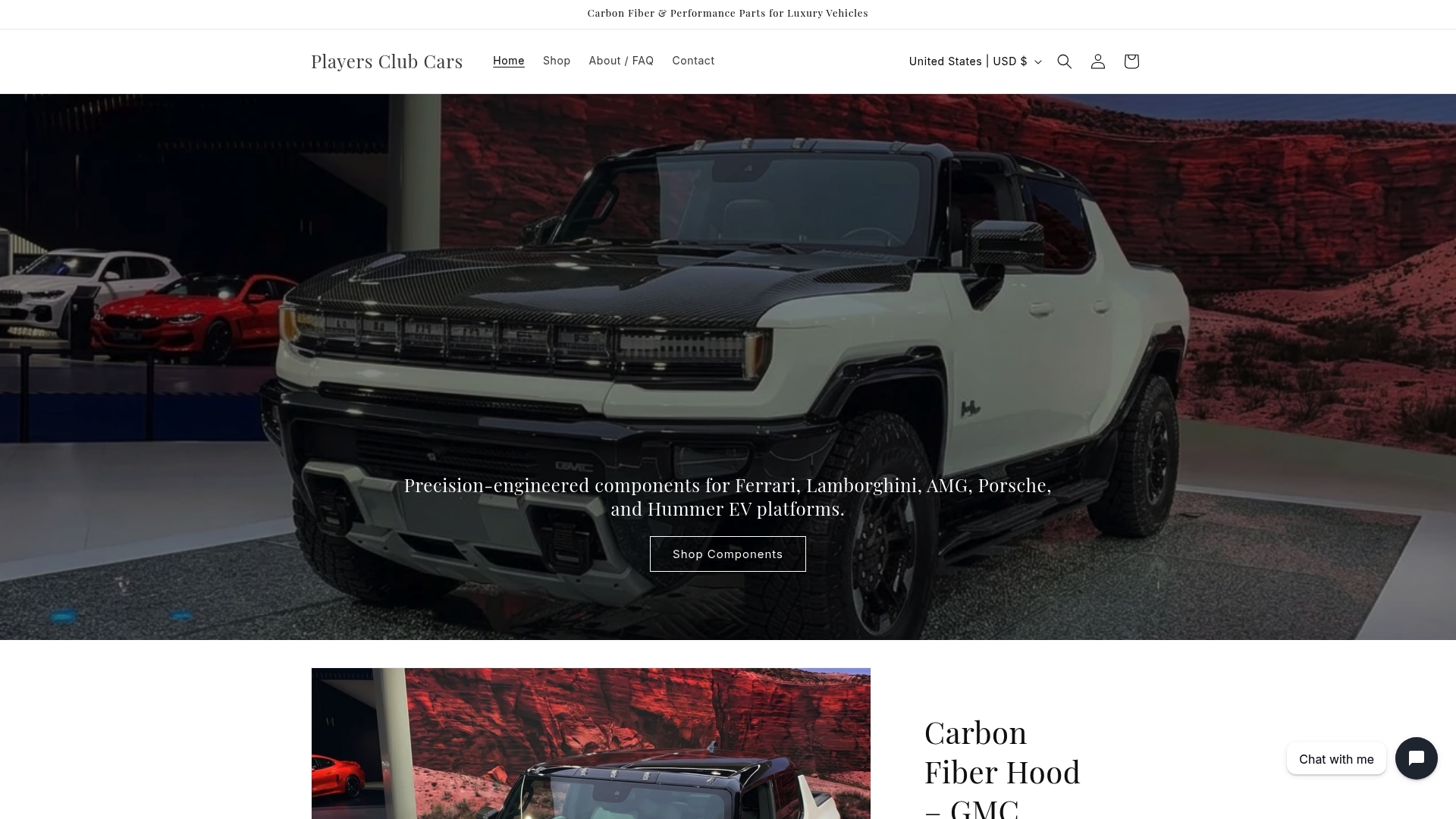
Playersclubcars supplies custom carbon fiber components for Ferrari, Lamborghini, Mercedes-AMG, Porsche, and Hummer EV. The catalog includes exterior and structural parts built to OEM fit tolerances, with surface finishes that respond well to the ceramic coating and maintenance protocols described in this guide. Products like the carbon fiber hood and carbon fiber rear wing are manufactured for owners who take long-term care seriously. Explore the full range of carbon fiber parts available for your vehicle at Playersclubcars, and pair any new component with the detailing routine outlined above from day one.
FAQ
What cleaners are safe for carbon fiber car parts?
Use pH-neutral shampoos diluted in distilled water. Avoid citrus solvents, alkaline degreasers, and household dish soap, as these degrade the resin clear coat on carbon fiber surfaces.
How often should ceramic coating be reapplied to carbon fiber?
Reapply every 6 months in high-UV climates like the U.S. Sunbelt, and every 12 months in moderate climates. Use a ceramic spray booster after each wash cycle to extend protection between full applications.
Can you use a clay bar on carbon fiber?
No. Clay bars cause unnecessary mechanical abrasion on carbon fiber surfaces. Use an iron fallout remover and isopropyl alcohol instead for chemical decontamination without contact damage.
What causes carbon fiber to yellow or look hazy?
Yellowing and haze result from UV exposure and thermal cycling breaking down the resin matrix. Unprotected carbon fiber shows significantly higher gloss loss and micro-cracking within 36 months compared to properly coated surfaces.
When should carbon fiber detailing be handled by a professional?
Seek professional repair when scratches penetrate through the clear coat to the weave, when delamination is visible at panel edges, or when resin micro-cracking is detected during inspection.